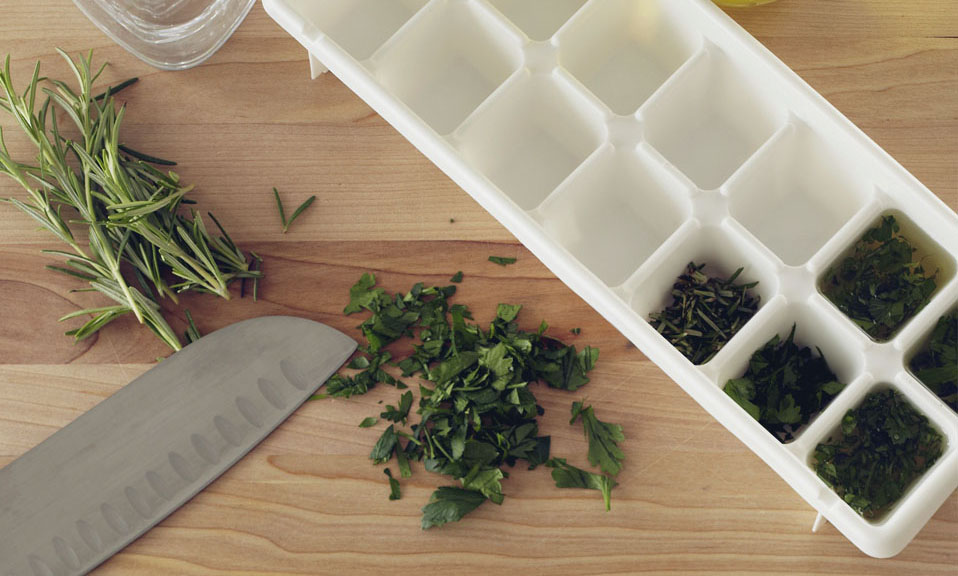
Culinary herbs are distinguished from vegetables in that, like spices, they are used in small amounts and provide flavor rather than substance to food.
Ever wonder why everything tastes exotic and exudes delicious aromas when you eat at a good five star restaurant? It is usually because of the seasoning. Exceptional chefs know that fresh food is always best and that includes fresh herbs.
Fantastic cuisine can be very simply prepared, but add a few fresh herbs and you have created a masterpiece. As you master the art of seasoning with fresh herbs, you will astound family and guests with your remarkable culinary talents.
Anise The leaves are frequently employed as a garnish, for flavoring salads, and to a small extent as potherbs. Far more general, however, is the use of the seeds, which enter as a flavoring into various condiments, especially curry powders, many kinds of cake, pastry, and confectionery and into some kinds of cheese and bread. Anise oil is extensively employed for flavoring many beverages both alcoholic and non-spirituous and for disguising the unpleasant flavors of various drugs.
Balm The foliage is widely used for flavoring soups, stews, sauces, and dressings, and, when fresh, to a small extent with salads. Otto or oil of balm, obtained by aqueous distillation from the “hay,” is a pale yellow, essential and volatile oil highly prized in perfumery for its lemon-like odor, and is extensively employed for flavoring various beverages.
Basil Fresh leaves are used as a garnish. Dried and crushed leaves are used mainly in Italian tomato sauves giving a sweet, scented, minty aroma. It is also used to make very tasty cold drinks.
Bay Leaf The dry light green colored long aromatic leaves and have a sharp, bitter taste. Mostly used in flavoring pulaos and some curries. the whole leaves are used to import a wonderful flavor only and are bitter and hard to chew. removed at the time of eating.
Black Caradmom Essential to Indian cooking and native to southwestern India. This spice is coarser in flavor and larger in size than the green cardamom. It is used in flavoring meat, poultry and rice dishes. When using the whole cardamom for flavoring dishes, remove the cardamom before serving as it does not taste good when bitten into.
Borage More popular than the use of the foliage as a potherb and a salad is the employment of borage blossoms and the tender upper leaves, in company or not with those of nasturtium, as a garnish or an ornament to salads, and still more as an addition to various cooling drinks. The best known of these beverages is cool tankard, composed of wine, water, lemon juice, sugar and borage flowers. To this “they seem to give additional coolness.” They are often used similarly in lemonade, negus, claret-cup and fruit juice drinks.
Catnip The most important use of the plant is as a bee forage; for this purpose waste places are often planted to catnip. As a condiment the leaves were formerly in popular use, especially in the form of sauces; but milder flavors are now more highly esteemed. Still, the French use catnip to a considerable extent. Like many of its relatives, catnip was a popular medicinal remedy for many fleshly ills; now it is practically relegated to domestic medicine. Even in this it is a moribund remedy for infant flatulence, and is clung to only by unlettered nurses of a passing generation.
Chevril The leaves, which are highly aromatic, are used, especially in France and England, for seasoning and for mixed salads. Chervil is rarely used alone, but is the chief ingredient in what the French call fines herbes, a mixture which finds its way into a host of culinary concoctions. The best variety is the Curled, which, though it has the same flavor as the plain, is a prettier garnish.
Chives Chives give a mild onion-like flavor to many foods and often are blended with other herbs for salads, soups and omelets. They have beneficial effects on the circulatory, digestive and respiratory systems. Chives are usually served in small amounts
Cilantro This member of the carrot family is also referred to as Chinese Parsley and Coriander. It is actually the leaves (and stems) of the Coriander plant. Cilantro has a very pungent odor and is widely used in Mexican, Caribbean and Asian cooking. The Cilantro leaves look a bit like flat Italian parsley and in fact are related.
Coriander Some writers say the young leaves of the plant are used in salads and for seasoning soups, dressings, etc. If this is so, I can only remark that there is no accounting for tastes. I am inclined to think, however, that these writers are drawing upon their imagination or have been “stuffed” by people who take pleasure in supplying misinformation.
Curry Curry leaves are available fresh or dried. These almond shaped dark green very aromatic leaves are used fresh in many Indian dishes. They are used to flavor mainly vegetables, lentils and breads or ground with coconut and spices to make a wonderful chutney. Curry leaves are added to hot oil for tempering. Like bay leaves, they are added for their flavor and kept aside while eating. To dry the fresh leaves, place leaves between two kitchen towels and microwave on high for a minute or two.
Dill Dill Weed is a tall, feathery annual in the parsley family. The weed is used to make Indian vegetables. In Western cuisines it is used to flavor herb vinegars, and shellfish, rice, bread, soups and stews. The Dill weed has aromatic leaves which are used fresh to flavor many South Indian dishes. Like bay leaves sometimes, they are added for their flavor and kept aside while eating.
Fennel Fennel is considered indispensable in French and Italian cookery. The young plants and the tender leaves are often used for garnishes and to add flavor to salads. They are also minced and added to sauces usually served with puddings. The tender stems and the leaves are employed in soups and fish sauces, though more frequently they are eaten raw as a salad with or without dressing. The famous “Carosella” of Naples consists of the stems cut when the plant is about to bloom. These stems are considered a great delicacy served raw with the leaf stalks still around them. Oil, vinegar and pepper are eaten with them. By sowing at intervals of a week or 10 days Italian gardeners manage to have a supply almost all the year.
Hyssop Hyssop has almost entirely disappeared from culinary practice because it is too strong-flavored. Its tender leaves and shoots are, however, occasionally added to salads, to supply a bitter taste. The colorless oil distilled from the leaves has a peculiar odor and an acrid, camphorescent taste. Upon contact with the air it turns yellow and changes to a resin. From 400 to 500 pounds of the fresh plant yield a pound of oil. The oil is used to some extent in the preparation of toilet articles.
Lavender The plant is sometimes grown for a condiment and an addition to salads, dressings, drinks, icecream, and in baking.
Mint The leaf, fresh or dried, is the culinary source of mint. Fresh mint is usually preferred over dried mint when storage of the mint is not a problem. The leaves have a pleasant warm, fresh, aromatic, sweet flavor with a cool aftertaste. Mint leaves are used in teas, beverages, jellies, syrups, candies, and ice creams.
Parsley he Germans use both roots and tops for cooking; the former as a boiled vegetable, the latter as a potherb. In English cookery the leaves are more extensively used for seasoning fricassees and dressings for mild meats, such as chicken and veal, than perhaps anything else. In American cookery parsley is also popular for this purpose, but is most extensively used as a garnish. In many countries the green leaves are mixed with salads to add flavor.
Oregano This popular herb whose name means “mountain joy” is available throughout the year. The warm, balsamic and aromatic flavor of oregano makes it the perfect addition to Mediterranean and Mexican cuisines. Oregano also has a large amount of antioxidants in its oil and leaves. It has 42 times the antioxidants as a medium sized apple, 30 times more than a white potato and 12 times more than an orange. Oregano is most commonly used as a seasoning in stews, pizzas and tomato based sauces. Fresh oregano leaves can enhance the flavor of salads and soups as well as Mediterranean dishes.
Rosemary Rosemary is widely used as a spice when cooking, especially in Mediterranean dishes. Its memorable flavor and unique health benefits makes it an indispensable herb for every kitchen. Rosemary contains substances that are useful for stimulating the immune system, increasing circulation, and improving digestion. Rosemary is often used in aromatherapy to increase concentration and memory, and to relieve stress.
Sage Because of their highly aromatic odor sage leaves have long been used for seasoning dressings, especially to disguise the too great lusciousness of strong meats, such as pork, goose and duck. It is one of the most important flavoring ingredients in certain kinds of sausage and cheese. In France the whole herb is used to distill with water in order to secure essential oil of sage, a greenish-yellow liquid employed in perfumery. About 300 pounds of the stems and leaves yield one pound of oil.
Tarragon The tender shoots and the young leaves are often used in salads, and with steaks, chops, etc., especially by the French. They are often used as an ingredient in pickles. Stews, soups, croquettes, and other meat preparations are also flavored with tarragon, and for flavoring fish sauces it is especially esteemed.
Thyme Thyme is one of the best known and most widely-used culinary herbs. Thyme fights several disease causing bacteria and viruses. It is a good digestive aid, helps menstrual cramps and is a great cold remedy. It is used to treat chest and respiratory problems including coughs, bronchitis, and chest congestion. Thyme is an excellent source of iron, manganese, and vitamin K. It is also a very good source of calcium and a good source of dietary fiber.
*Source: Herbal medicine, University of Maryland Medical Center